

A foam roller for home, on the go or at the gym
A foam roller has become an indispensable tool in the studio, gym, or living room. Also known as a massage roller or foam roller, this compact tool helps to relax muscles, stimulate blood circulation, and increase flexibility. Whether you engage in intensive strength training, regularly practice yoga, or are recovering from a long workday, the thoughtful use of a foam roller supports physical well-being.
What does a foam roller help with?
The effect of a foam roller (or massage rollerThis is based on self-myofascial release (SMR). This is a form of self-massage in which light to deep pressure is applied to muscles and the surrounding connective tissue (the fascia). Muscle knots and stiffness can develop after strenuous exertion or prolonged sitting. By rolling specifically over the muscles, you stimulate local blood circulation.
Improved blood flow helps with the faster removal of waste products and supply of nutrients. This reduces delayed onset muscle soreness, which often peaks 24 to 48 hours after training.
In addition to recovery, the foam roller is valuable during the warm-up. By rolling briefly and dynamically over the muscles, you bring the tissue up to temperature and make the muscles supple. This increases the range of motion and reduces the risk of injury during the subsequent exercises.
Finally, a foam roller regularly serves as a supporting training tool in Pilates and yoga. Due to its unstable shape, the tool is perfectly suited for balance, core, and stability exercises.
Check out our foam rollers
How do you use a foam roller correctly?
To get the maximum benefit from a foam roller and prevent injuries, it is important to work according to a fixed structure.
1. Calm and controlled movements
Place the foam roller under the muscle group to be treated, such as the calf, hamstring, thigh, or upper back. Roll slowly back and forth at a speed of about a few centimeters per second. There is no need to rush; give the tissue time to respond to the pressure.
2. Hold pressure on sensitive points
When you encounter a sensitive spot or muscle knot (trigger point), stop the rolling motion. Hold the pressure on this specific spot for 20 to 30 seconds while continuing to breathe calmly. You will notice that the tension gradually decreases.
3. Monitor posture and breathing
Engage your core to maintain good posture. Breathe deeply and calmly in through the nose and out through the mouth. Holding your breath creates extra tension in the body, which counteracts the effect of the massage.
4. Avoid joints and the lower back
Roll exclusively over muscle tissue. Avoid direct contact with bones, joints, and the lower back. The lower back has less natural protection from the rib cage, so too much pressure on this area can be harmful. For the back, focus primarily on the upper and middle back.
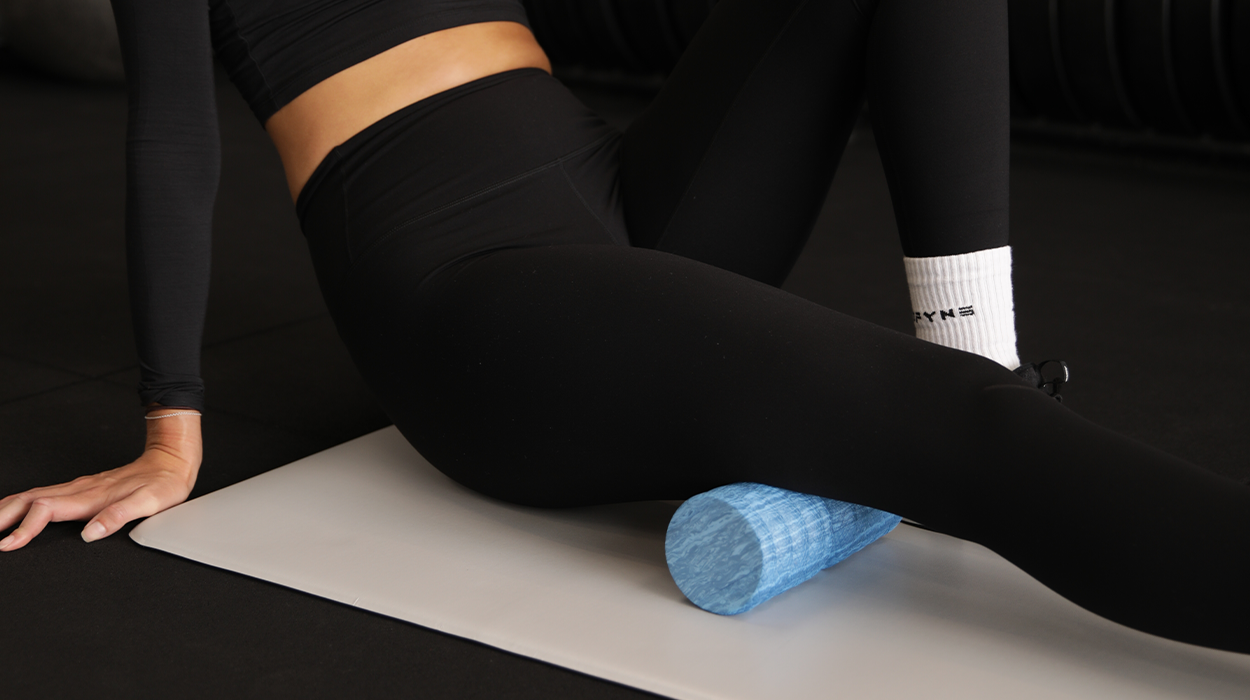
Which foam roller suits your situation?
The range of foam rollers varies in length, hardness, and texture. Choosing the right model depends on your experience, the intended use, and the location where you use the roller.
Size and length
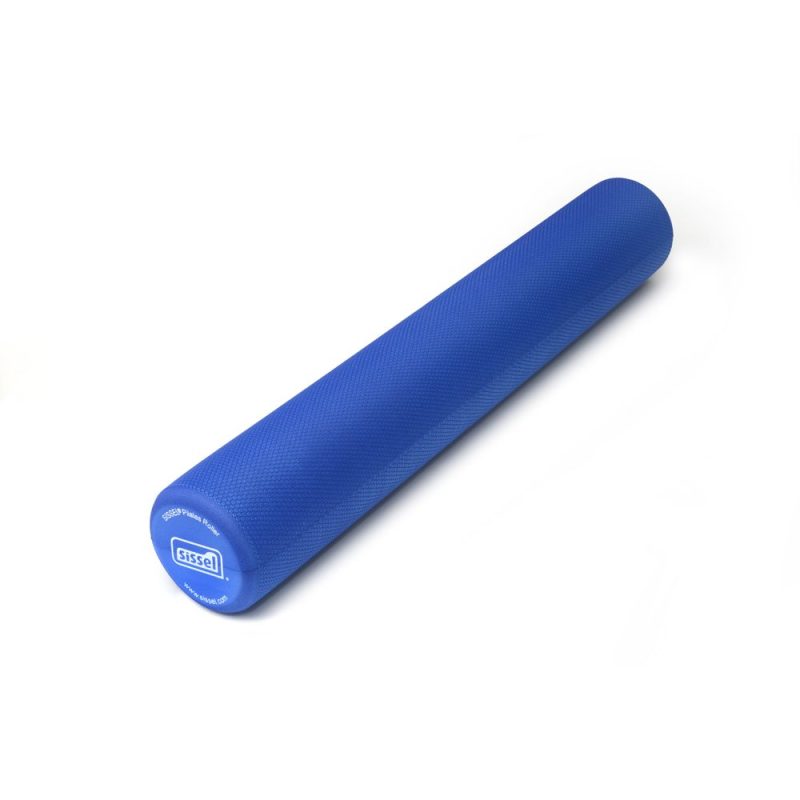
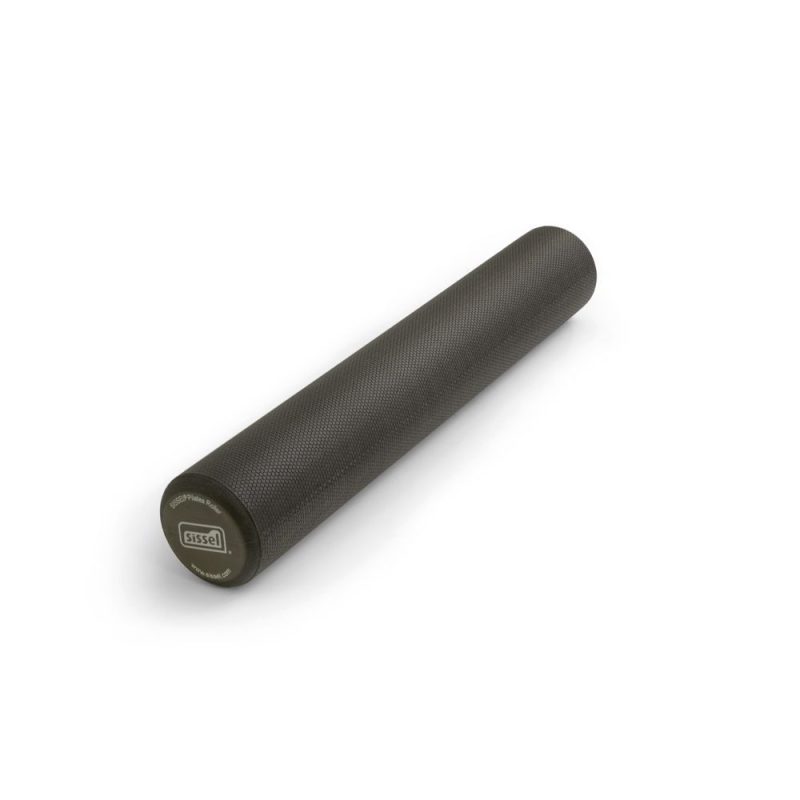
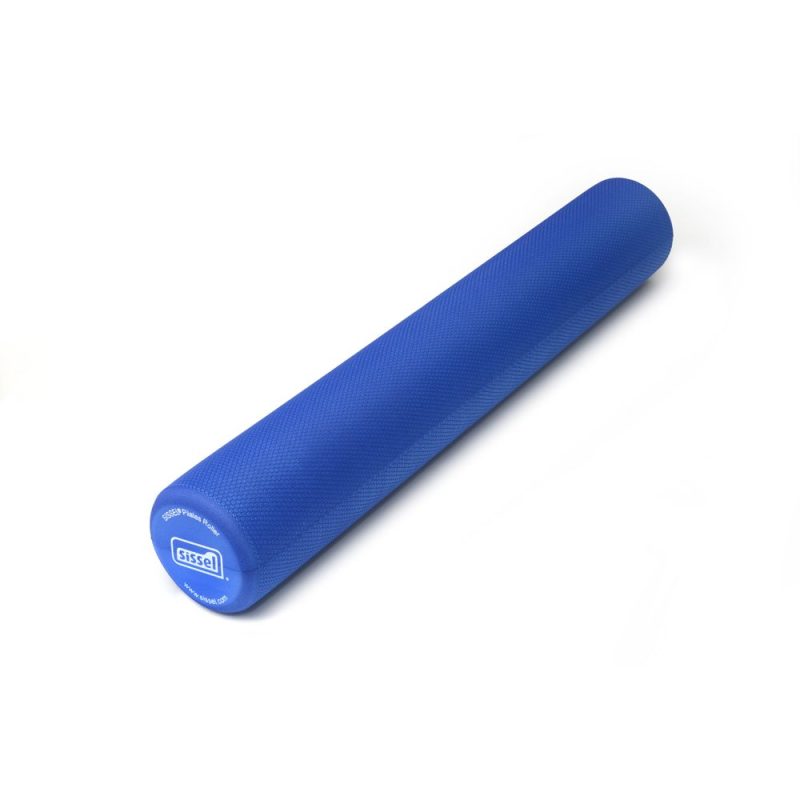
- Long foam rollers (90 to 100 cm): Ideal for home use or in the studio. The length provides sufficient support to rest the entire spine on it crosswise or lengthwise, which is commonly used in Pilates and relaxation exercises.
- Short to medium foam rollers (30 to 45 cm): Practical for on the go or in the gym bag. These compact models are perfect for targeted treatment of specific muscle groups such as the arms, calves, or thighs.
Hardness and surface
- Soft to medium foam rollers: Suitable for beginners, sensitive muscles, or recovery from overuse. The gentle pressure ensures a comfortable experience.
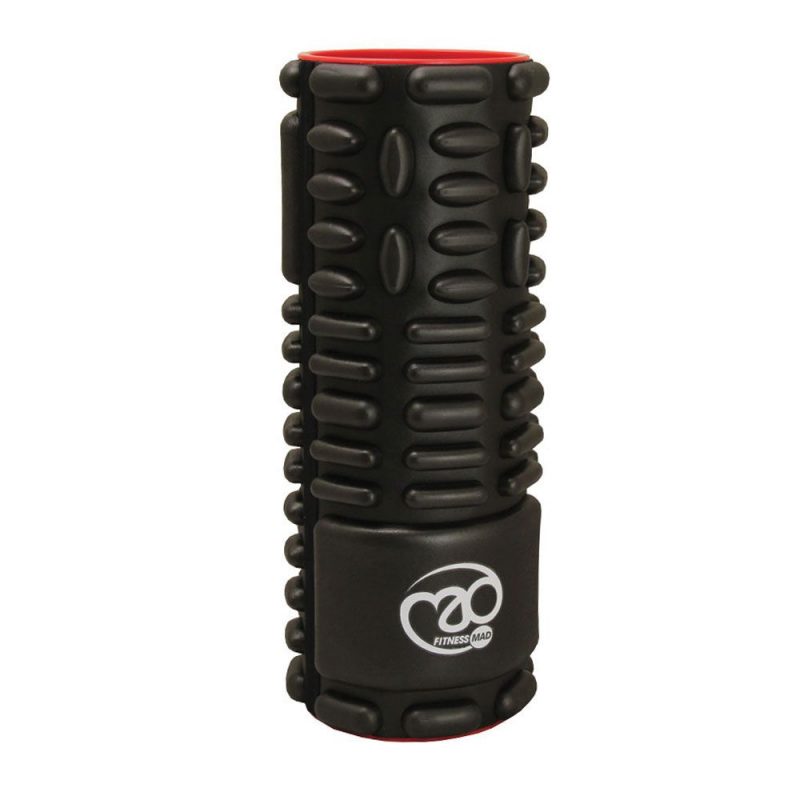
- Hard foam rollers with texture: Provides a deeper and more intensive massage. Patterns or bumps on the roller stimulate the connective tissue more penetratingly, which is pleasant for experienced athletes or for stubborn muscle knots.
- Semi-circular foam rollers: They have a flat and a convex side. The flat side rests firmly on the ground for controlled exercises, while the convex side offers an extra challenge during balance training.
Making the right choice with Yoga-Pilatesshop
At Yoga-Pilatesshop, promoting a sustainable and responsible exercise routine is central. The assortment consists of carefully selected foam rollers made from sustainable materials that retain their shape, even with prolonged and intensive use.
Unsure which type of hardness or size suits your goals? Yoga-Pilatesshop offers clear product information and expert advice, ensuring you always find a foam roller that fits your body and training level. View the full range in the webshop and give your muscles the care and recovery they deserve.
Frequently asked questions about foam rollers
Do you have any more questions about foam rollers? Perhaps your question is already answered below.
What exactly does a foam roller do to your muscles?
A foam roller applies pressure to the muscles and surrounding connective tissue. This eliminates muscle knots, relaxes the muscle, and improves local blood circulation. This leads to faster recovery and less muscle pain.
Is it okay to use a foam roller painful?
Rolling over sensitive muscles can cause a somewhat unpleasant sensation, also known as a 'pleasant pain'. However, the pressure must remain bearable. Sharp or stabbing pain signals that you are applying too much pressure or rolling in the wrong spot.
How often can you use a foam roller?
In principle, you can use a foam roller daily. Always listen carefully to your body. Daily use is fine for a light warm-up or cool-down, but give muscles a rest if they are very sensitive or overloaded.
Can I use a foam roller for my lower back?
It is not recommended to roll a standard foam roller over the lower back. The lower back lacks the protection of the rib cage, which can cause excessive pressure on the vertebrae. Instead, focus on the upper back, buttocks, and hips to indirectly relieve the lower back.
Is a soft or a hard foam roller better for me?
For beginners and people with high sensitivity, a softer foam roller is recommended. Experienced athletes or people with deep muscle knots often benefit more from a harder roller with texture.