

Get fit with a yoga ball
Whether you call it a yoga ball, fitness ball, Swiss ball, or gym ball, this round tool is one of the most versatile sports accessories that you can bring into your home. Originally, these balls were primarily used in physiotherapy for rehabilitation, but by now they are indispensable in yoga and Pilates studios and even in the workplace. In this article, we explain why training with a yoga ball is so effective, how to choose the right size, and the ways you can use the ball for a fitter and stronger body.
What is a yoga ball and how does it work
A yoga ball is a large, air-filled ball made of elastic material. The unique aspect of training with a ball is its instability. Because the ball moves constantly, your body is forced to continuously make small corrections to maintain balance. In doing so, you not only use your large muscle groups but also activate the deeper stabilizing muscles that are often harder to reach with regular strength exercises.
At Yoga Pilatesshop, we offer balls with anti-burst technology. This means that, should a hole unexpectedly appear in the ball, it will not burst open with a loud bang but will deflate slowly. This is essential for your safety during training.
It is important that you choose a ball that suits your height.
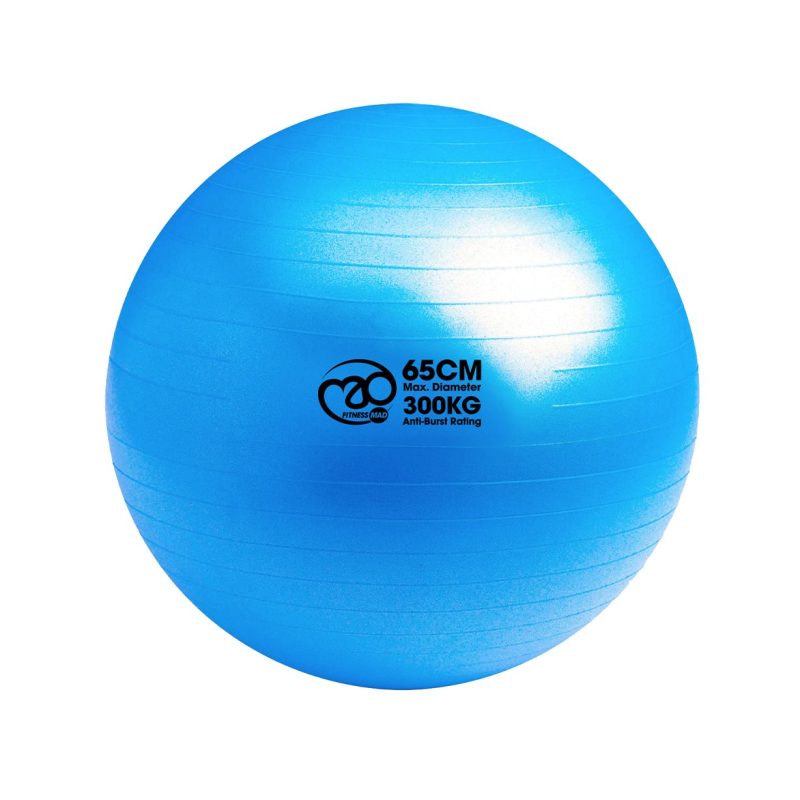
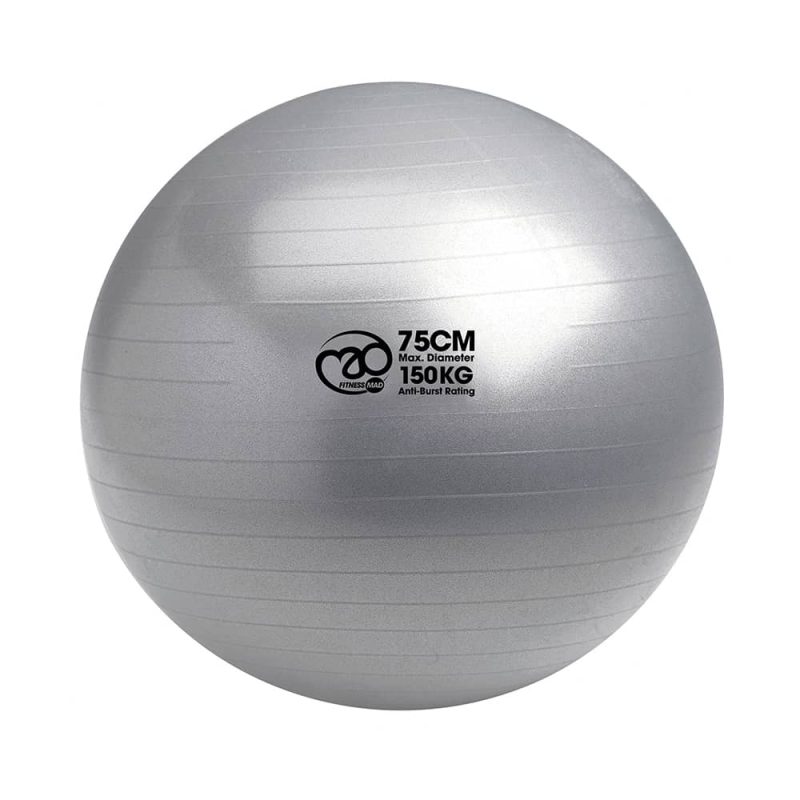
A yoga ball of 55 cm is usually suitable for persons up to about 1.65 metersAre you between approximately 1.65 meters and 1.80 meters long, then a yoga ball is 65 cm often the best choice. For people longer than about 1.80 meters is usually a yoga ball of 75 cm recommended. You have the right size when you sit comfortably on the ball with your feet flat on the ground and your knees at an angle of approximately 90 degrees.
Check out our yoga balls
Why training with a fitness ball is effective
Using a fitness ball offers benefits that go beyond just a fun variation to your workout. It is a serious tool for functional strength training.
First, a yoga ball strengthens your core. Your “core” is the center of your body and consists of the muscles in your back, abdomen, and pelvis. A strong core ensures better posture and reduces the risk of back problems. When you sit on a ball or perform exercises, these muscles have to work hard to keep your spine stable.
In addition, you also improve your balance and coordination. Due to the constant challenge of the moving surface, you improve your proprioception: your body's ability to perceive where you are in space. This translates directly into better balance in daily life and during yoga exercises such as the tree pose or the warrior pose.
And finally, did you know that you also improve your posture and back relaxation when using a yoga ball during your exercises? In addition to active training, the ball is also a great tool for relaxation. By lying back over the ball, you can open your chest and release the tension in your upper back and shoulders that often builds up after a long day at the computer.
Who is the yoga ball suitable for?
The target audience for yoga and fitness balls is incredibly broad. From avid athletes to people who simply want to sit in a healthier position at the office.
Yoga and Pilates practitioners
In the Pilates world, the ball is often used to make exercises more challenging by adding extra resistance, or easier by providing support during mobility exercises.
Office workers and home workers
The 'sitting ball' is a popular alternative to the traditional office chair. By sitting actively on a ball, you prevent a slumped posture and stay in motion unconsciously, which stimulates blood circulation.
Pregnant women
Many women use the ball during pregnancy to keep the pelvic floor supple and find a comfortable sitting position. The ball can also help cope with contractions during childbirth preparation by gently bouncing or rotating the pelvis in circles.
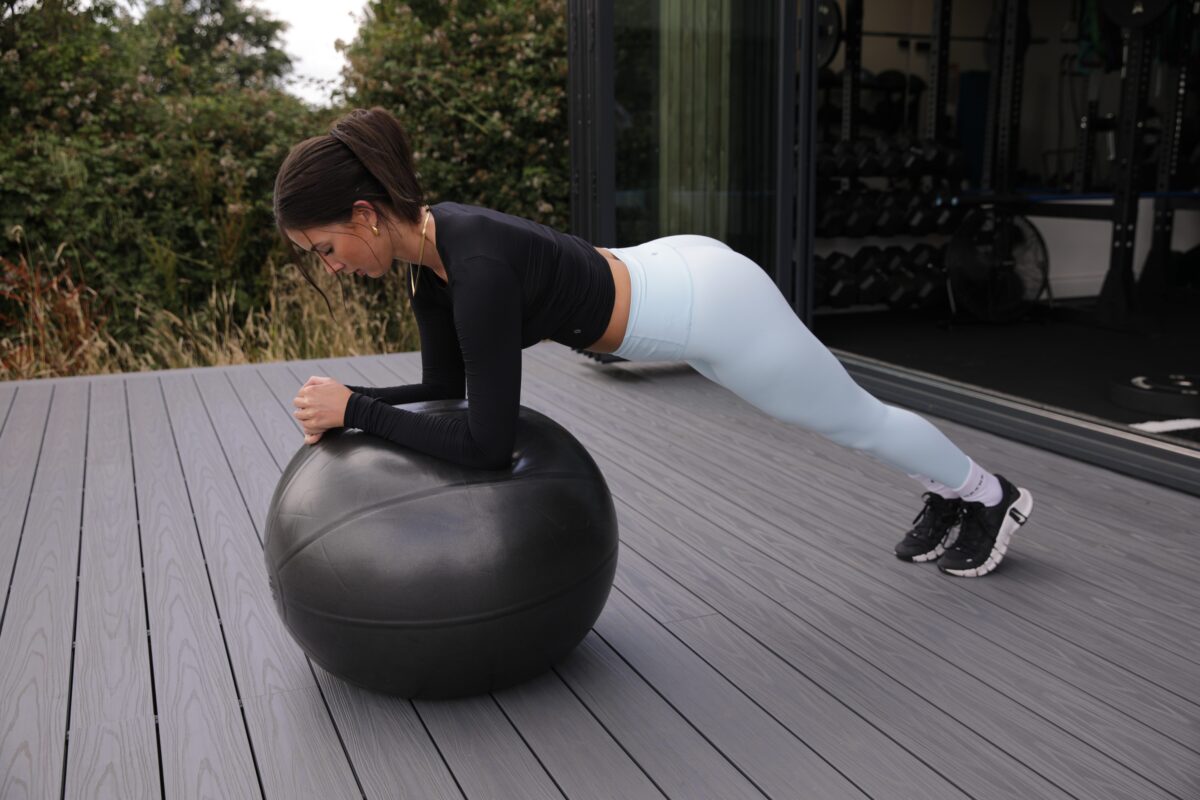
The different types of balls in our assortment
At Yoga Pilatesshop, we distinguish between the large Swiss balls and the smaller soft balls.
Large Swiss balls (55 cm, 65 cm, 75 cm)
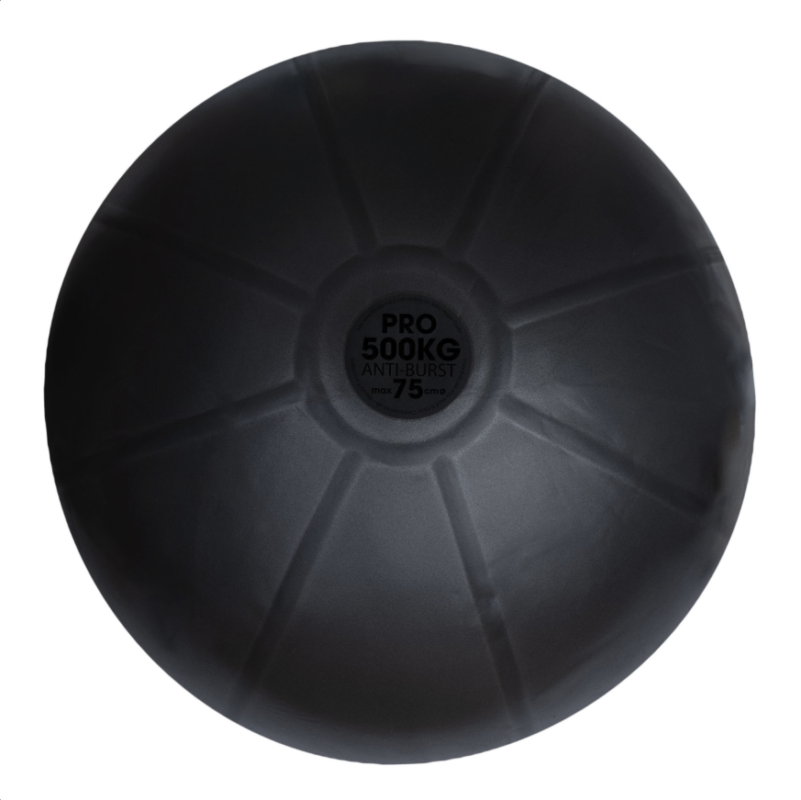
Our big Swiss balls They are intended for core exercises, strength training, and as a replacement for a chair. They are available in various load capacities, ranging from 150 kg to as much as 500 kg for intensive professional use.
Soft balls (18 cm to 30 cm)
These small Pilates balls, also known as mini balls or soft balls As mentioned, you use them for specific Pilates exercises. You can clamp them between your knees to train the inner thighs, or place them under your lower back for extra support and focus during abdominal exercises.
How do you choose the right size yoga ball
The correct size is crucial for an effective workout and a healthy sitting posture. The general guideline is based on your height:
- Body height 152 – 163 cm: Choose a 55 cm ball.
- Body height 164 – 180 cm: Choose a 65 cm ball.
- Body height 180 cm and taller: Choose a 75 cm ball.
When sitting on the ball, your knees and hips should form an angle of approximately 90 degrees. Do you use the ball primarily as an office chair and do you have a high desk? Then it is sometimes better to choose a size larger.
Tips for inflation and maintenance
When you receive the ball for the first time, the material is often still a bit stiff. Inflate the ball to about 80% and let it rest for a day so that the material can stretch. Only then inflate it fully to the desired diameter.
You can easily clean the ball with a damp cloth and a mild cleaning agent. Keep the ball away from sharp objects and direct heat sources, such as heaters, to extend the lifespan of the material.
Frequently asked questions about yoga balls
Here we answer the most frequently asked questions about yoga balls, fitness balls, and everything related to them.
Is a yoga ball the same as a fitness ball?
Yes, in practice, the terms yoga ball, fitness ball, gym ball, and Swiss ball are used interchangeably for the same product. In our shop, you will find them under these different names, but they all serve the same purpose: stability training and posture improvement.
Can I use the ball as a complete replacement for my office chair?
Although sitting on a ball is very healthy, we recommend alternating. Start with blocks of 30 to 60 minutes. Because your muscles have to work harder, you may tire more quickly at the beginning. Listen to your body and alternate with working from a chair or standing.
How do I know if my ball is inflated enough?
The ball should feel firm but still give a little when you sit on it. Measure the diameter of the ball while inflating it; if you have a 65 cm ball, it should not become much larger than that dimension to ensure safety and shape.
Is a pump included with the ball?
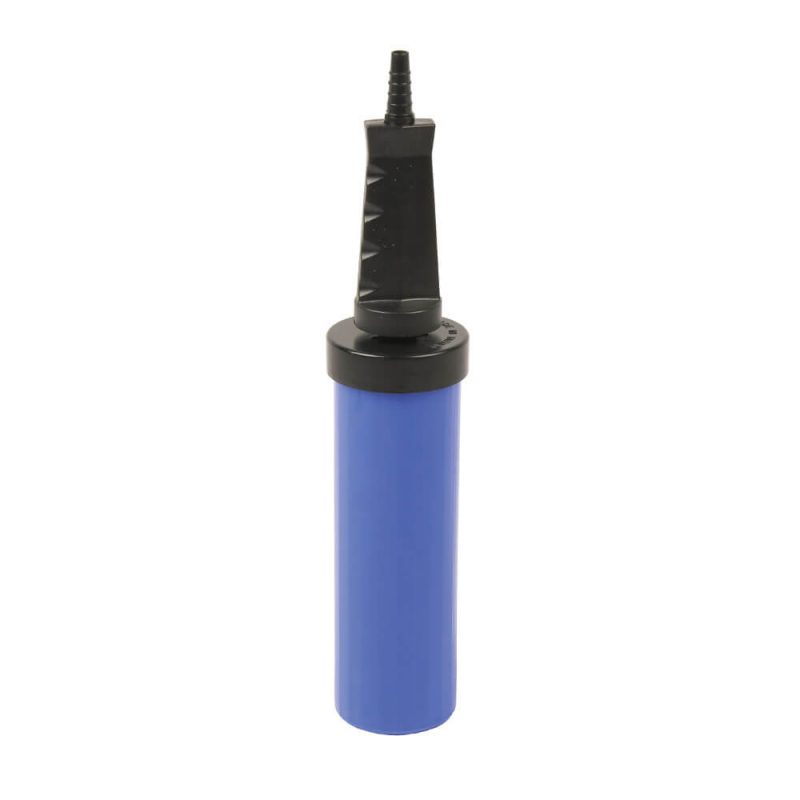
Many of our Swiss balls come with a pump included as standard, so you can get started right away. Always check the product specifications to see if this applies to the model you have chosen. If a pump is not included, you can easily order one separately in our shop.
Can I also use the yoga ball outside?
That is possible, but be careful. The surface must be completely flat and free of stones or twigs that could damage the ball. Preferably use a fitness mat under the ball when training outdoors to prevent wear and tear on the equipment.
What size yoga ball do I need?
The correct size yoga ball depends mainly on your height. In general, the following applies:
- 55 cm yoga ball: suitable for people up to approximately 1.65 m
- 65 cm yoga ball: suitable for people between approximately 1.65 m and 1.80 m
- 75 cm yoga ball: suitable for people taller than approximately 1.80 m
With the correct size, your knees are at an angle of approximately 90 degrees when you sit on the ball.
How hard should a yoga ball be inflated?
A yoga ball should feel firm, but still give slightly when you sit on it. A ball that is too hard can be less comfortable, while one that is too soft offers insufficient support.
How do I maintain a yoga ball?
Clean the yoga ball with a soft cloth and mild cleaner. Avoid sharp objects and direct sunlight to keep the material looking good for longer.