

What is reformer Pilates?
In the world of pilates there are two main forms: mat Pilates and reformer Pilates. Although the exercises on the mat are very effective, the Pilates reformer offers an extra dimension to your training. For anyone who has ever walked into the studio, the reformer It might look impressive or even a bit technical at first. But what exactly is reformer Pilates, and why are more and more people choosing this specific training method? In this article, we explain how the reformer works, its benefits, and its versatility.
The basics: what is a Pilates reformer
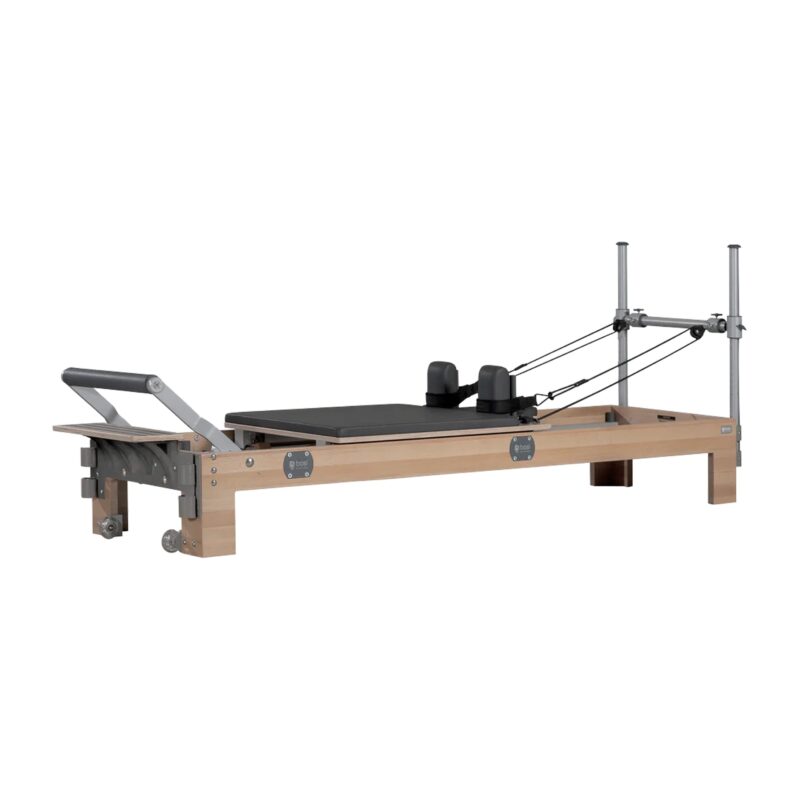
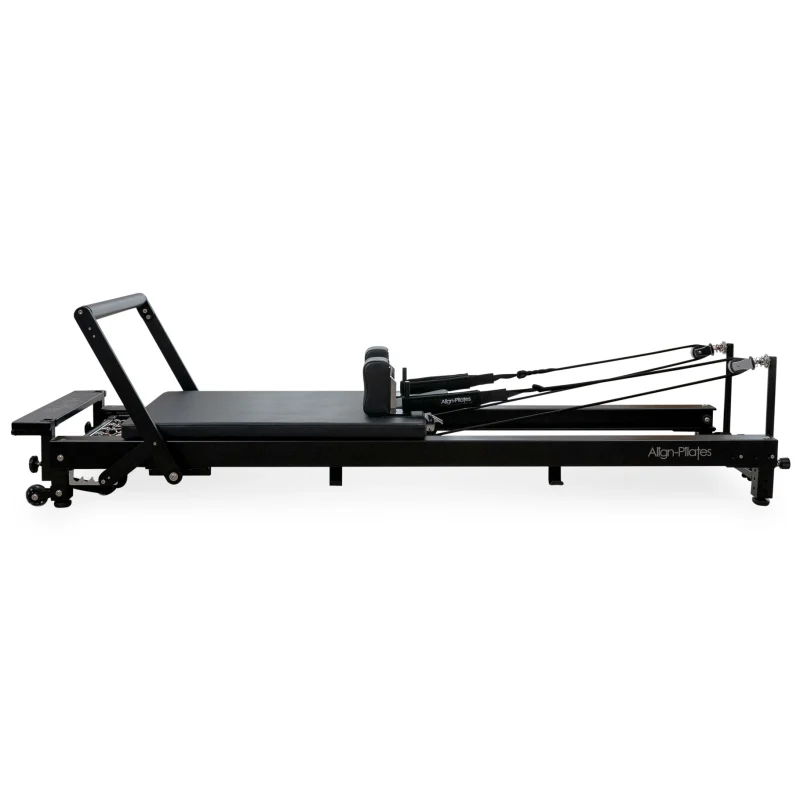
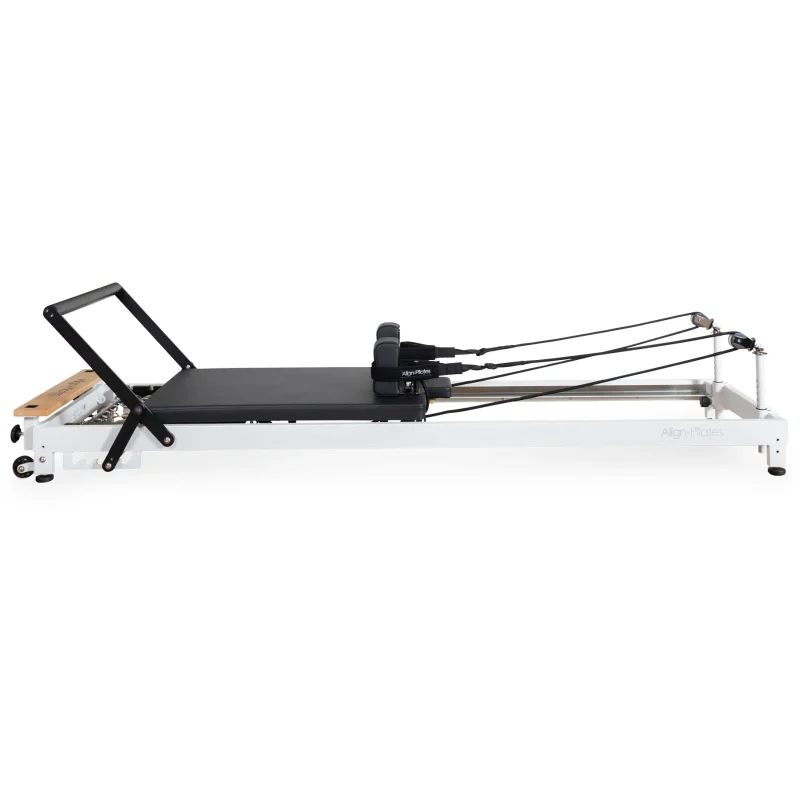
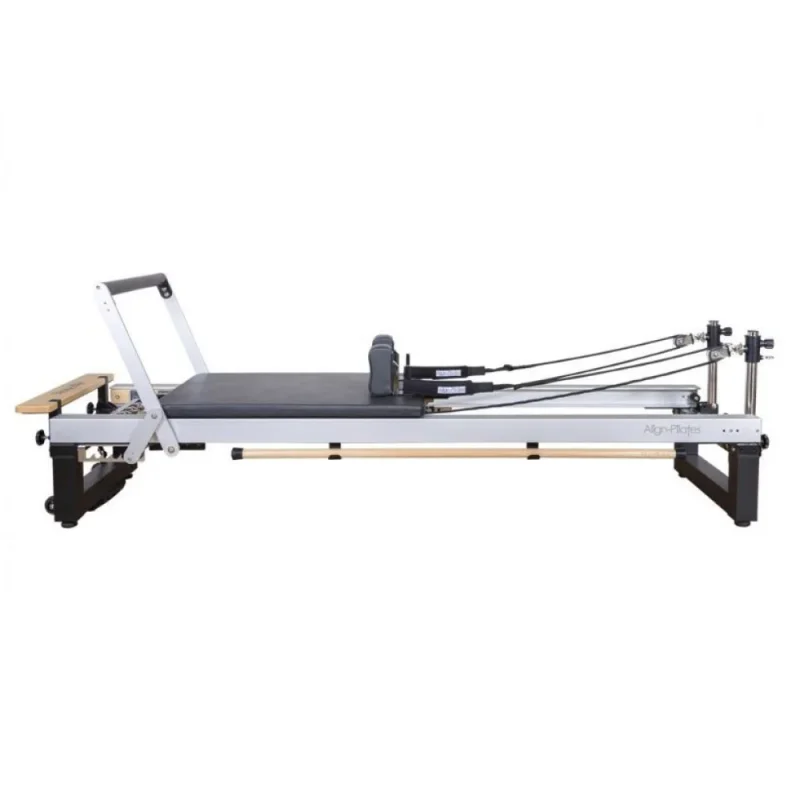
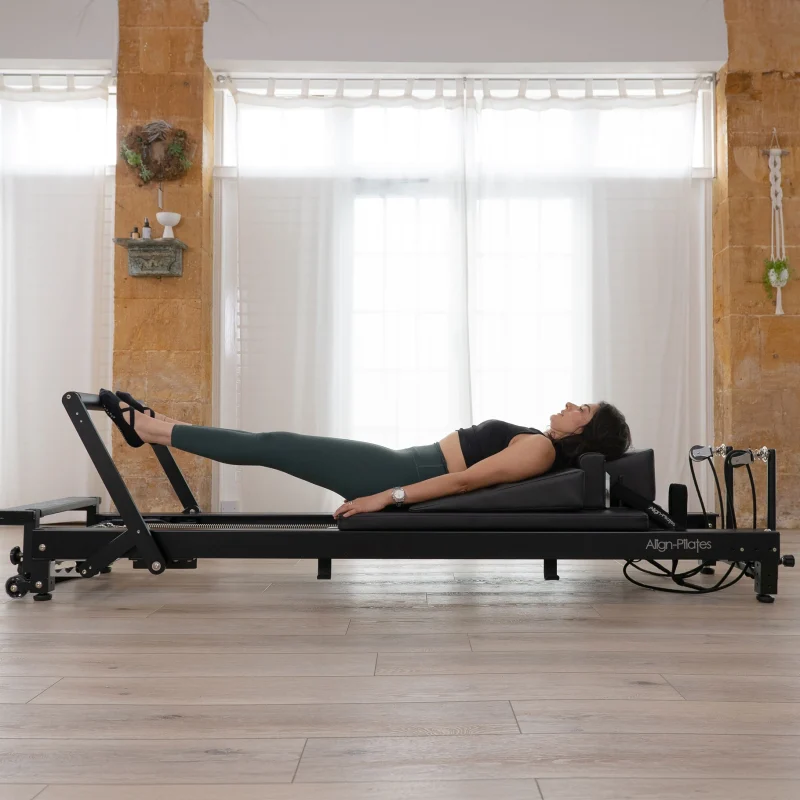
A Pilates reformer is a device developed by Joseph Pilates in the early 20th century. The apparatus consists of a wooden or metal frame containing a moving platform, the 'carriage'. This platform is connected to the frame by springs. These springs provide resistance, which forms the core of the training.
In addition to the springs, the reformer features a foot bar, long loops for hands or feet, and a headrest. By adjusting the resistance of the springs, an exercise can be made lighter for support or heavier to challenge muscle strength. This makes reformer Pilates a very precise way of training, allowing you to fully tailor the resistance to your level.
How does reformer Pilates work in practice?
During a session, you lie, sit, kneel, or stand on the moving carriage. By pushing yourself off against the footbar or pulling on the loops, you set the platform in motion. The goal is to perform this movement in a controlled manner, continuously working against the resistance of the springs.
The beauty of the reformer is that the machine challenges you with instability on the one hand, but guides you along the correct range of motion on the other. This allows you to learn very specifically which muscles to activate. The result is a full-body workout that emphasizes the core, but also intensively trains the arms and legs.
View our Pilates reformers
Who is this form of training suitable for?
Reformer Pilates is accessible to a very broad target group, partly due to the adjustability of the device. Consider, for example, athletes who want more powerful muscles. Unlike traditional strength training with heavy weights, reformer Pilates focuses on creating 'long, lean' muscles. You train for strength without putting heavy strain on the joints.
But also for people struggling with certain injuries, for example to the back. Because many exercises are performed lying down, there is little impact on the joints. The reformer provides support to the back, making it a safe way to rehabilitate or strengthen the back muscles without overloading them.
Pregnant women also benefit from the use of Pilates reformers. Under the guidance of a specialized trainer and a pregnancy wedge the reformer is ideal during pregnancy. The adjustable spring resistance helps keep the pelvic floor and stabilizing muscles strong, which helps with carrying the extra weight and preparing for childbirth.
The benefits of training on a reformer
Why would you trade the mat for the machine? The benefits of reformer Pilates are numerous:
- Improved core stability. The carriage is constantly in motion, requiring your deep abdominal and back muscles to work during every exercise to maintain your balance.
- Increasing flexibility. The machine allows you to make movements with a greater range of motion than on the floor. The loops and springs help you get deeper into a stretch while maintaining control.
- Better posture. Many people struggle with poor posture due to prolonged sitting. Reformer Pilates corrects imbalances in the body and strengthens the muscles along the spine, causing you to automatically walk more upright.
- Mind-body connection. Just like yoga, Pilates requires complete focus and controlled breathing. You are so concentrated on the technique that there is no room for daily stress for a while.
The various reformers in our assortment
At Yoga Pilatesshop, we offer various models, from reformers for home use to professional equipment for studios.
Home Use (Home Reformers) These models are often somewhat lighter and sometimes even foldable or can be stored upright. Ideal for those who want to bring the studio experience to the living room without the device permanently taking up all the space.
Professional Studio Reformers These reformers are built for intensive daily use. They are often made of solid maple or robust aluminum and offer the smoothest riding experience and the widest range of spring adjustment options.
Maintenance of the reformer
A Pilates reformer is an investment in your health and therefore deserves proper maintenance. Clean the carriage upholstery and loops after each use with a mild, alcohol-free spray to keep the material supple. Regularly check the springs for wear and ensure that the rails on which the carriage runs remain dust-free for silent movement.
Want to know more? In our article about the maintaining your reformer we will delve even deeper into the maintenance section. Did you know that we can also perform maintenance on your reformer ourselves?
Frequently asked questions about reformer pilates
Here we answer the most frequently asked questions about reformer Pilates and everything related to it.
Is reformer Pilates harder than mat Pilates?
Not necessarily more difficult, but certainly different. On the mat, you have to bear and control all your own body weight. The reformer can actually make the exercises easier by providing support via the springs, but it can also increase the difficulty by adding more resistance. It is therefore an excellent way for beginners to learn proper form.
Do I need to wear shoes on the reformer?
No, on the reformer you usually train on non-slip socks or bare feet. However Anti-slip socks are strongly preferred. They provide grip on the carriage and the footbar, which is essential for your safety, and they are more hygienic than bare feet.
How often per week do I need to train for results?
For noticeable results in strength and flexibility, we recommend doing a session two to three times a week. Consistency is key in Pilates; as Joseph Pilates himself said: “After 10 sessions you feel the difference, after 20 sessions you see the difference, and after 30 sessions you have a whole new body.”
Do I need a lot of space for a reformer at home?
A standard reformer is approximately 2.30 to 2.50 meters long and about 60 to 70 centimeters wide. It is important that you also have some space around the machine (approximately 50 cm on either side) to perform exercises next to the machine. Do you have less space? Then take a look at our foldable models.
Can I work independently at home on a reformer?
If you have never trained on a reformer, we recommend taking a few classes at a studio first. The technique and spring adjustment require precision. Once you understand the basics, you can train very effectively at home with the help of online classes.
Which reformer is suitable for home use?
For home use, compact or foldable models are often ideal. The F3 reformer from Align Pilates, for example, is designed to be easily stored thanks to the foldable system. The R8 reformer is popular among home users who want to combine a professional reformer experience with a compact design.
Which reformer is suitable for tall people?
For taller and/or wider individuals, extra length on the reformer is important for comfort and freedom of movement. The A8 reformer Van Align is very suitable for this thanks to the longer and wider frame and the extra space during exercises.