

Achieve your best with yoga socks
During a yoga session, you want to be fully in the moment. You focus on your breathing, your posture, and the balance between body and mind. Nothing is more annoying than slipping on your mat as soon as your hands or feet start to get warm. That is where yoga socks come in handy. Although yoga is traditionally practiced barefoot, more and more yogis and yoga teachers are opting for the support of special socks. They not only offer a solution for cold feet in the winter or in a chilly studio, but provide extra safety and stability, in particular, during challenging asanas.
Choosing the right equipment is an essential part of a safe and responsible yoga practice. In this comprehensive guide, we look at the anatomy of the foot, the functional properties of various materials, and how the right footwear can contribute to deepening your poses.
What are the benefits of yoga socks?
Wearing the right yoga socks brings several benefits that can immediately improve your practice. One of the most important reasons to choose this aid is increased stability. Specially designed pairs feature a functional underlayer that prevents slipping, which helps to avoid injuries and allows you to hold poses longer and with more control.
Preventing injuries and overuse
When your feet slip during an active pose such as Downward Dog (Adho Mukha Svanasana) or Warrior poses (Virabhadrasana), the muscles in your legs and lower back immediately compensate. These sudden, uncontrolled micro-corrections can lead to strain on the tendons and joints. By choosing grippy materials, you maintain a solid base, ensuring that muscle force is distributed evenly across the targeted muscle groups.
Hygiene in the shared studio
In addition, hygiene plays a major role. When using loaner mats in a yoga studio, a layer of fabric forms a barrier between your skin and the mat. This is much fresher for yourself and for those who come after you. Even on your own mat, bacteria and skin oils accumulate over time. High-quality fabrics effectively absorb perspiration, keeping the mat clean and dry.
Thermoregulation and relaxation
Finally, they offer comfort and warmth. The human body cools down quickly during quiet sessions or final relaxation. Cold feet send a signal to the nervous system that the body must remain in an active, protective mode. This makes it harder to let go mentally and physically. Warm feet stimulate blood circulation and help you reach a deep state of relaxation more quickly.
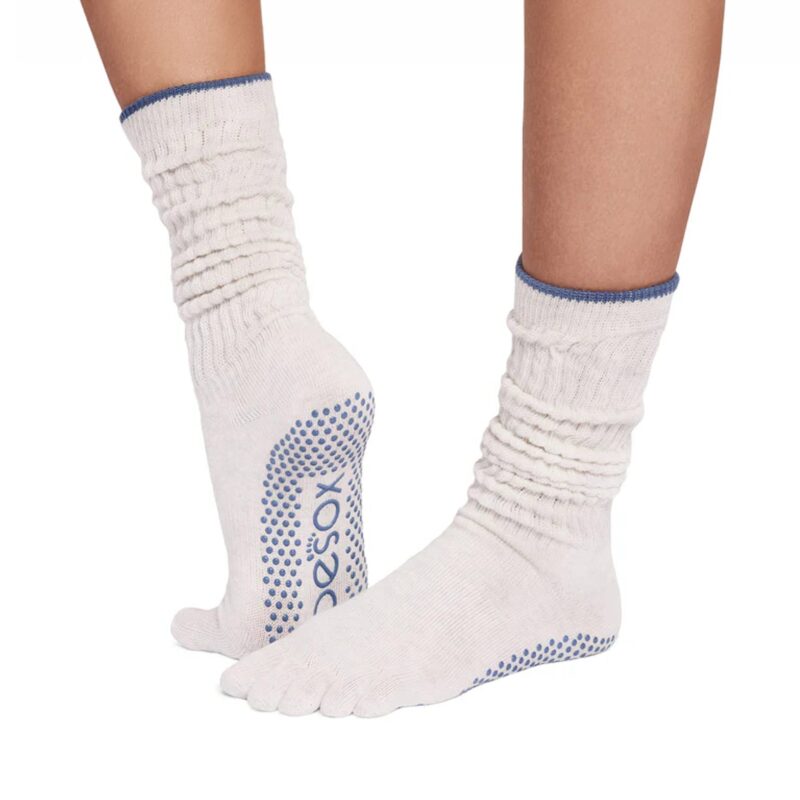
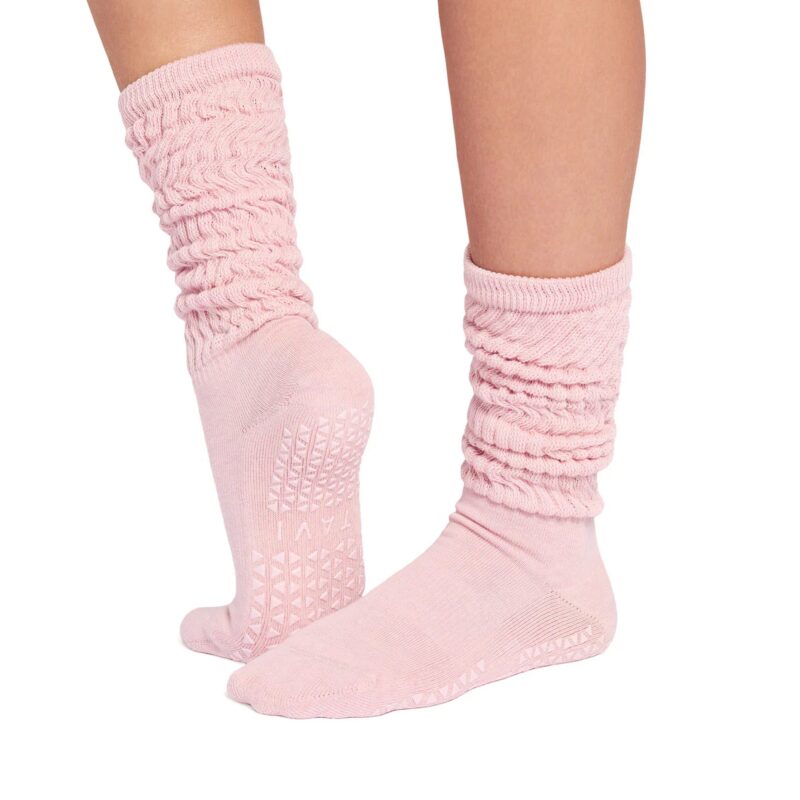
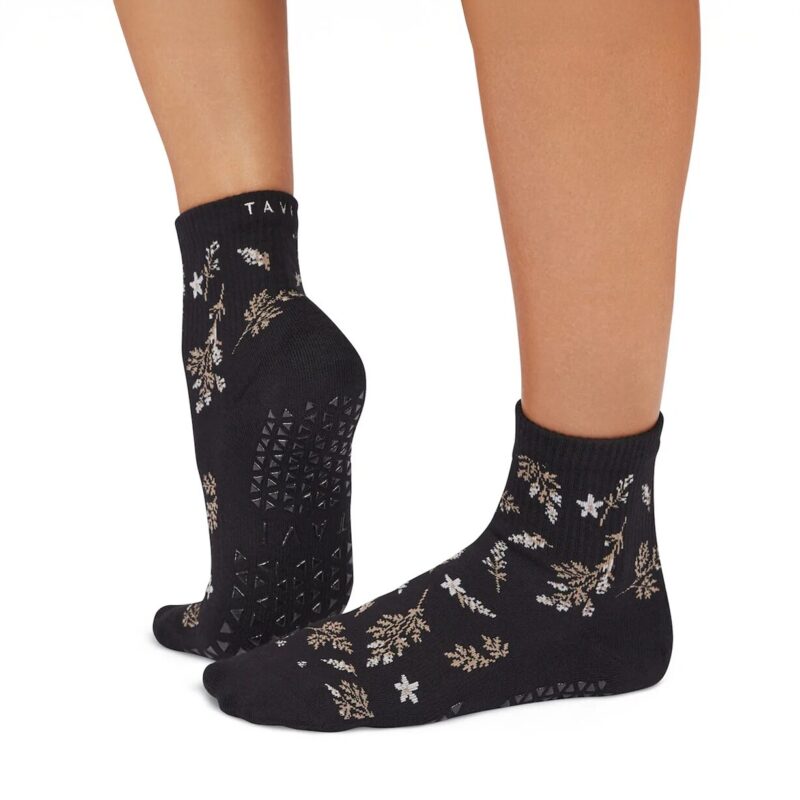
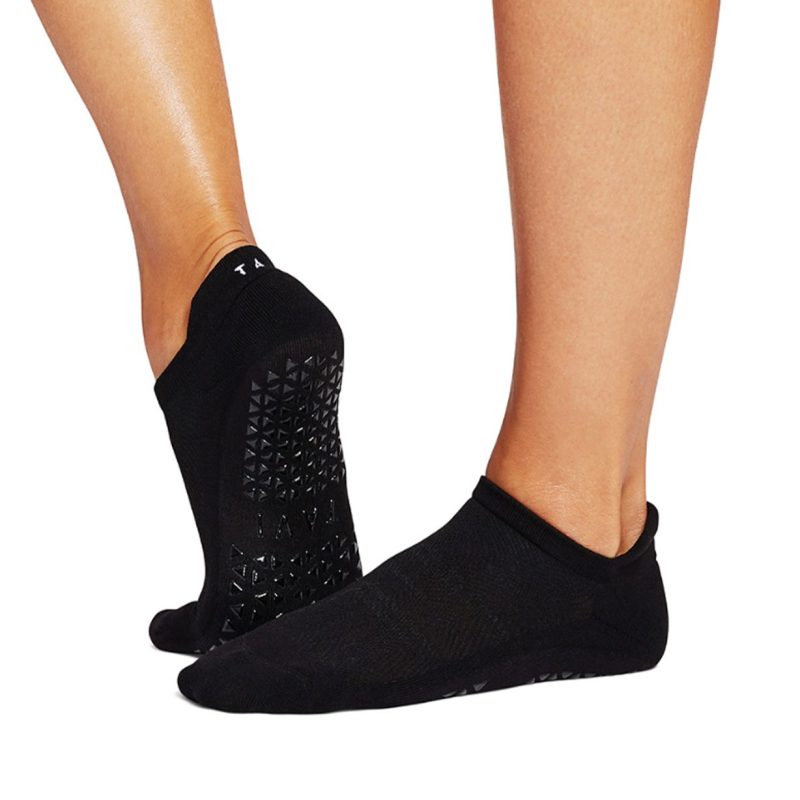
Check out our yoga socks
Which types of yoga socks are best for beginners?
When you are just starting out with yoga, the number of options can be overwhelming. For beginners, it is especially important to consider the type of class you are taking and how much grip you need. Building a good practice starts with understanding the difference between functional grip and comfort.
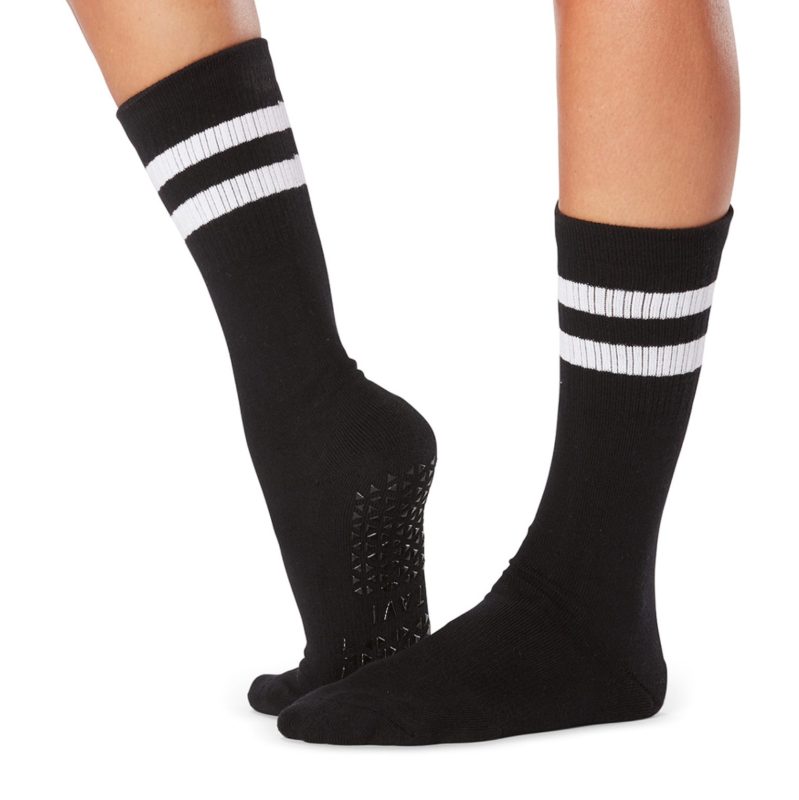
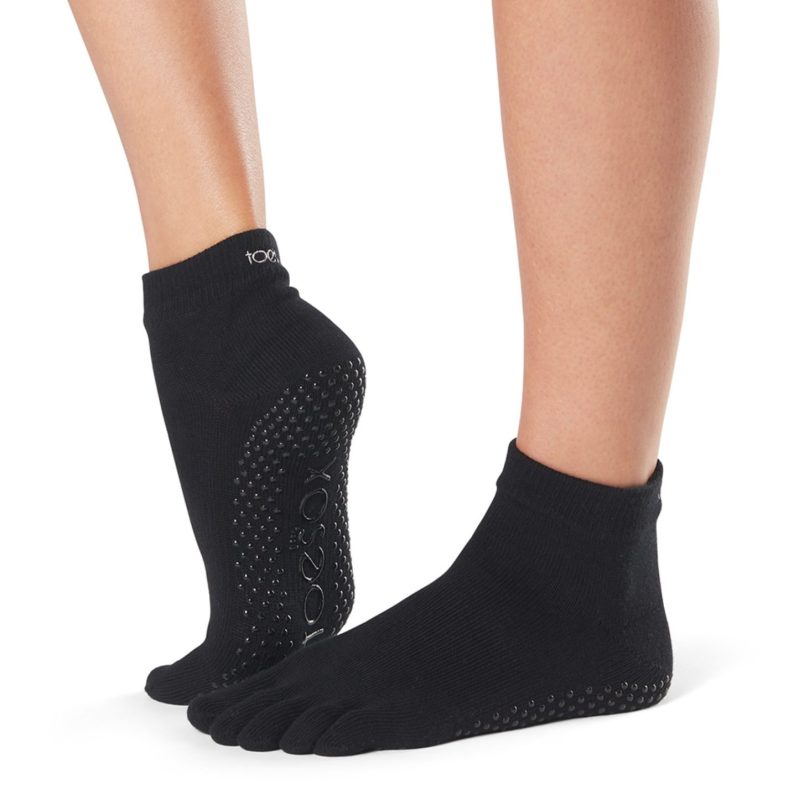
When stability is your biggest challenge, are non-slip socks the best choice. These variants, also known as yoga socks with gripThey are equipped with silicone or rubber studs on the bottom. This ensures that you stay firmly on the mat or studio floor, even while you are still working on building your core and muscle strength.
Additionally, there is a choice between models with open or closed toes:
- Bare-toe variants: These designs leave the toes free, allowing you to maintain natural contact with the floor and spread your toes optimally for a firm base. This is ideal for beginners who do not want to completely lose the feeling of bare feet.
- Variants with closed toes: These enclose the entire foot. They offer maximum warmth and complete hygienic protection, which can be very pleasant during the colder months or in a drafty room.
Which brands of yoga socks are recommended by yoga teachers?
Yoga teachers critically assess durability, fit, and grip quality when making recommendations. Brands specifically developed for studio practices simply perform best in practice, because the grip profiles are designed not to wear out quickly or come loose after a few washes.
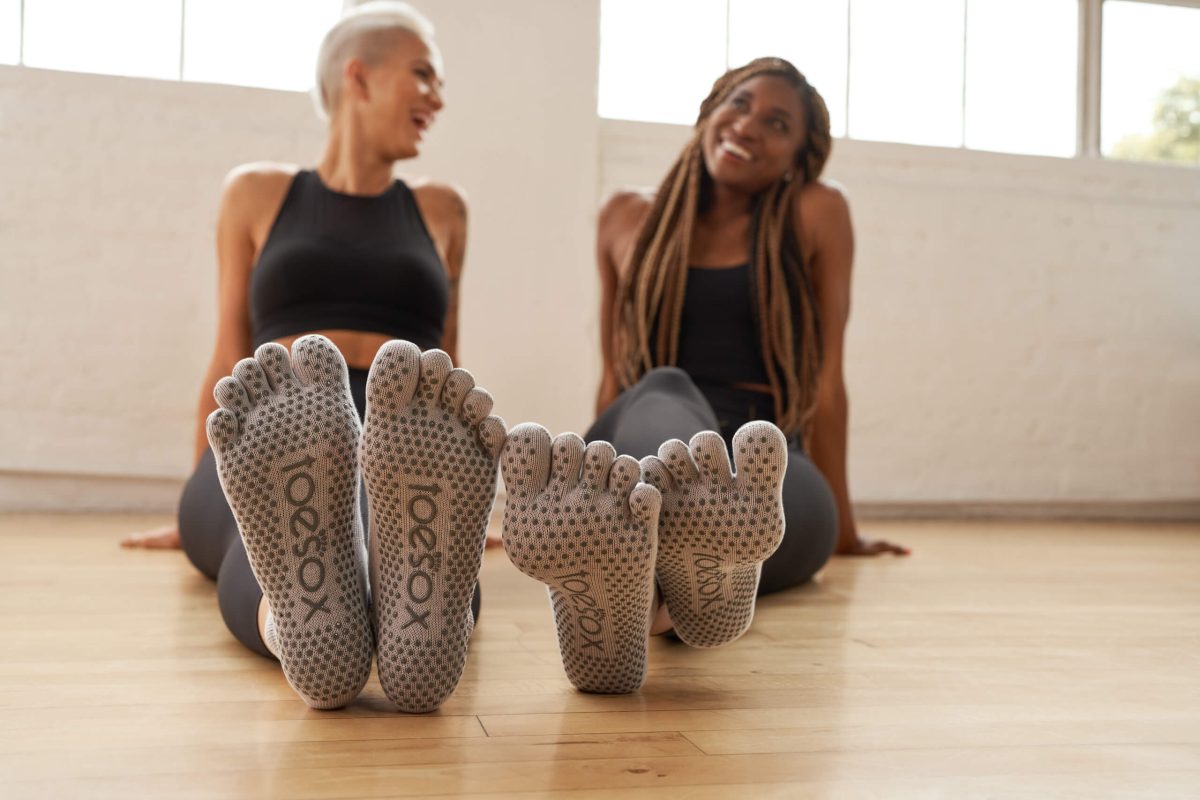
Two brands that are highly regarded worldwide by professionals are ToeSox and TaviToeSox is known for its innovative designs featuring individual toe compartments. This encourages the natural anatomy of the foot and allows the toes to move independently of each other, significantly improving balance. Tavi combines these functional features with high-quality workmanship and stylish designs, making the socks not only functional during an intense Vinyasa or Barre workout but also elegant in appearance. Both brands use soft, breathable materials such as organic cotton, effectively wicking away perspiration and keeping feet dry.
The anatomy of the foot during yoga
To understand why the right footwear is so effective, it helps to look at the anatomy of the human foot. The foot consists of 26 bones, 33 joints, and more than a hundred muscles, tendons, and ligaments. During standing postures, the foot acts as the foundation of your entire body.
Spreading the toes
An important aspect of yoga is 'pada bandha', or the foot lock. This involves activating the four corners of the foot to create stability and upward energy. To achieve this optimally, it is essential that the toes have room to spread. Regular socks often compress the toes, disrupting the natural balance. Special toe socks solve this problem by enveloping each toe individually, preserving the natural width of the forefoot and correctly activating the deeper foot muscles.
Material selection and sustainability of yoga socks
The material composition largely determines the comfort and lifespan of your sportswear. Cheaper materials often quickly lose their elasticity or chafe when wet. Quality brands therefore invest in specific fiber combinations.
Organic cotton versus synthetic fibers
Organic cotton forms the basis of most premium models. It is soft on the skin, breathable, and reduces the risk of skin irritation. To ensure the fit is maintained after intensive use and frequent washing, the cotton is often combined with elastane (spandex) and synthetic fibers such as nylon or polyester. This combination ensures a close-fitting design that prevents wrinkles, which is essential to prevent blistering during dynamic movements.
| Material | Key feature | Benefit for the yogi |
| Organic cotton | Breathable and moisture-absorbing | Keeps feet dry and comfortable |
| Elastane (Spandex) | High elasticity | Ensures a snug fit without pinching |
| Nylon / Polyester | Wear-resistant and dimensionally stable | Extends the lifespan during intensive use |
How do you care for yoga socks for a longer lifespan?
To keep the grip and elasticity of your tools optimal for as long as possible, proper maintenance is crucial. The silicone or rubber studs on the bottom can lose their grip due to improper washing or drying.
Washing instructions
It is recommended to always wash garments inside out. This protects the grip studs from friction caused by the washing drum and other clothing. Use a mild detergent and wash on a gentle cycle at a maximum temperature of 30 degrees Celsius. Avoid using fabric softener; this leaves a thin, slippery layer on the fibers and the anti-slip layer, significantly reducing functionality.
Drying
Preferably air dry the textiles. The high temperatures of a tumble dryer can damage the elastic and cause the silicone grip to melt or become brittle. By laying them flat or hanging them up, they retain their original shape and functionality for many years.
Frequently asked questions about yoga socks
Do you have any more questions about yoga socks? Perhaps your question is already answered below.
Can I wear regular sports socks during yoga?
Regular sports socks are usually not suitable for yoga. They lack the necessary non-slip layer on the bottom, making the risk of slipping on a yoga mat greater than when training barefoot. Additionally, they compress the toes, which compromises stability.
How tight should the socks fit?
They must fit snugly around the foot without restricting circulation. If the fabric is too loose, it may slide during exercises, which can lead to irritation or a feeling of instability. Ensure that the heel and any toe compartments fall in exactly the right place.
Are yoga socks also suitable for Pilates and Barre?
Yes, the functional properties that are important for yoga also apply to Pilates and barre. In these disciplines, you frequently work on equipment such as a reformer or at a ballet barre, where a good grip and hygiene are equally essential for the safe execution of the movements.
Where can I find affordable yoga socks online?
Naturally at Yoga-Pilatesshop.nl! Here you will find not only affordable yoga socks, but also a huge selection from the best brands such as Tavi and Toesox. Ordered today, delivered within 3 working days.
What makes a good non-slip sock for yoga?
A high-quality anti-slip sock has a secure fit, durable grip on the bottom, and is made of breathable materials. As a result, the sock stays in place well during movement and retains its grip even after multiple washes.
Are cheap non-slip socks just as good as more expensive non-slip yoga socks?
Cheap anti-slip socks may seem attractive at first, but they often vary significantly in quality. They are frequently made from less durable materials and feature a grip layer that wears out faster or peels off after multiple washes. As a result, grip decreases and the socks offer less stability during training.
Good yoga and Pilates socks such as Tavi, ToeSox, and MoveActive are specifically designed for intensive use. They retain their fit, comfort, and grip, even after frequent wear and washing. Additionally, they fit the foot better, making them less likely to slip down or shift during exercises. Although the purchase price is often slightly higher, these non-slip socks generally last much longer and offer a more pleasant and safer training experience.